Reverse Phone Lookup: How to Find Out Who Owns a Number
A reverse phone lookup takes a phone number and searches it against public records, published directories and licensed data-broker files to identify who the number most likely belongs to. A good result names the subscriber, their general location and their carrier, and links the number to online accounts registered with it. It does not tap the phone or reveal live location.
What a reverse phone lookup actually searches
There is no single master registry of phone numbers. Every lookup is an aggregation problem, and results are assembled from four different kinds of source, each with its own coverage and its own failure mode.
Carrier and numbering records are the most reliable layer. Every number in the North American Numbering Plan is allocated to a carrier, and the routing databases that make calls connect are authoritative about which carrier currently serves a number and whether the line is mobile, landline or VoIP. This layer is close to 100% accurate, because it has to be for the phone system to function. It tells you nothing about a person.
Published directory and public-record data is where names come from. Historically that meant phone books; today it means the digitised remains of them plus voter files, property records, court filings, business registrations and professional licences. This layer is deep for landlines and businesses and much shallower for mobile numbers, which were never published.
Data-broker files fill the mobile gap. Brokers assemble identity graphs from account signups, marketing lists, loyalty programmes, warranty registrations and hundreds of other commercial sources, then sell resolved records. Coverage on US mobile numbers is genuinely good. Accuracy varies, and stale records are the main problem — a broker file may confidently name the person who held the number in 2019.
Open web and platform signals are the newest layer. If a number was used to register a messaging, social or dating account, that account can often be detected without the account being visible to you. This is how a lookup can tell you a number is attached to an active WhatsApp or Telegram profile.
What a lookup can find, and what it cannot
The gap between marketing copy and reality in this category is wide, so it is worth being blunt about it.
| What people expect | What is actually available |
|---|---|
| The owner's full name | Often, for landlines and established mobile accounts. Frequently blank for prepaid |
| Current home address | Rarely. City and state, usually; a precise current address, almost never |
| Carrier and line type | Yes — reliably, from routing records |
| Whether the number is flagged for spam | Yes, from complaint and reputation databases |
| Linked social and messaging accounts | Often, where the number was used to register the account |
| Email addresses linked to the number | Sometimes, via broker identity graphs |
| Live GPS location | No. This does not exist in any legitimate service |
| Call or message contents | No. This is illegal to obtain and no lookup provides it |
Any service promising live location or call history for an arbitrary number is either lying or describing something criminal. Treat that promise as a reason to leave.
Why free lookups return so little
Free reverse lookup sites are generally not doing the expensive part. Carrier and line-type data is cheap to query and is what free tools show you. Identity resolution — the part that produces a name — costs money per query, because the underlying broker data is licensed per lookup.
That is the whole economics of the category. Free tools return metadata and then ask you to pay for identity. It is not necessarily a scam, but it does mean "free reverse phone lookup" and "find out who owns this number for free" describe two different products. We wrote a longer piece on what free phone number lookups genuinely return if you want the detail.
How to read a result without fooling yourself
The single most useful habit is to stop reading a report as an answer and start reading it as evidence.
A strong result looks like agreement across sources that have no reason to agree. The name from a broker file matches the name on a voter record; the city matches the area code's region and the carrier's coverage; a linked email address uses a recognisable variant of the same name; a social profile registered to the number shows the same city. Four independent sources telling the same story is a real identification.
A weak result is a single name with nothing behind it. One broker record, no corroboration, no linked accounts, a city that does not match anything else. That name may still be correct — but it is one source's claim, and single-source claims in this data are wrong often enough that acting on one is a mistake.
The failure mode to watch for is a report that presents both cases identically. Raw record dumps do exactly that: they list every field they found at equal weight, and leave you to notice that three of the four fields came from the same file.
Recycled numbers: the mistake almost everyone makes
US carriers reclaim disconnected numbers and reassign them, typically after a holding period of around 45 days to a year depending on the carrier. Tens of millions of numbers are recycled every year.
This matters enormously for lookups, because broker files update slowly. A number reassigned eighteen months ago may still resolve to its previous owner across several databases at once — which produces exactly the "multiple sources agree" pattern that normally signals confidence.
The tell is time. If the corroborating records all have old timestamps and nothing recent links the number to that person — no active account registrations, no current profiles — you may be looking at a well-documented former owner rather than the person who answers today.
The legal line you should not cross
This part is short and it genuinely matters.
Reverse phone lookup for personal purposes — identifying a caller, checking that a marketplace buyer is real, verifying that a date is who they say they are — is lawful. Consumer lookup services are not consumer reporting agencies under the Fair Credit Reporting Act, and their terms say so.
Using the results to decide whether to hire someone, rent to them, lend to them, or insure them is unlawful. Those decisions require an FCRA-compliant report, with the accuracy standards, dispute rights and adverse-action notices that come with it. The rule exists because people have been denied housing and jobs on the strength of stale broker records they never got to see or correct.
Stalking, harassment and intimidation are separately illegal regardless of how the number was obtained.
When a reverse lookup is the right tool
It is the right tool when you have a number and need context before you respond to it: an unknown caller who left no voicemail, a number from a marketplace listing, a match who moved the conversation off-platform fast, a recruiter you have not heard of. In each case the useful output is not certainty, it is enough context to decide whether to engage.
It is the wrong tool when you need certainty about a stranger's identity for a consequential decision. For that, the honest answer is that you need something with legal accountability behind it — an FCRA-compliant background check — not a consumer lookup.
If your immediate problem is unwanted calls rather than identifying a person, stopping the calls at the carrier and OS level is a faster route than identifying every caller.
What ClarityScanner does differently
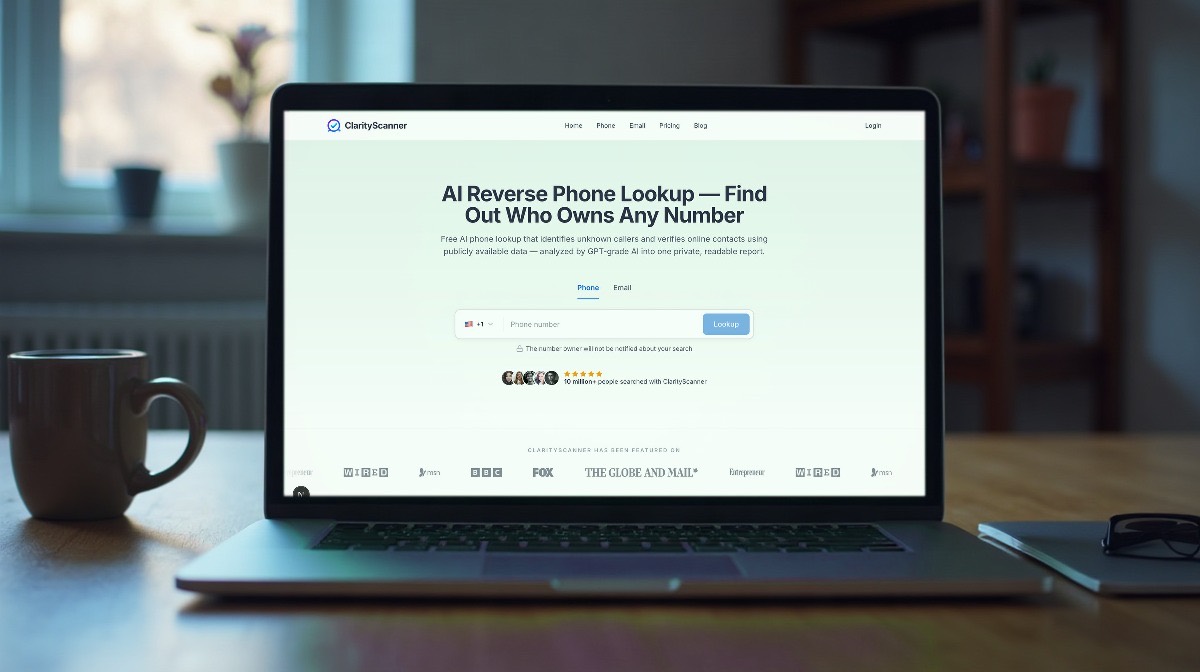
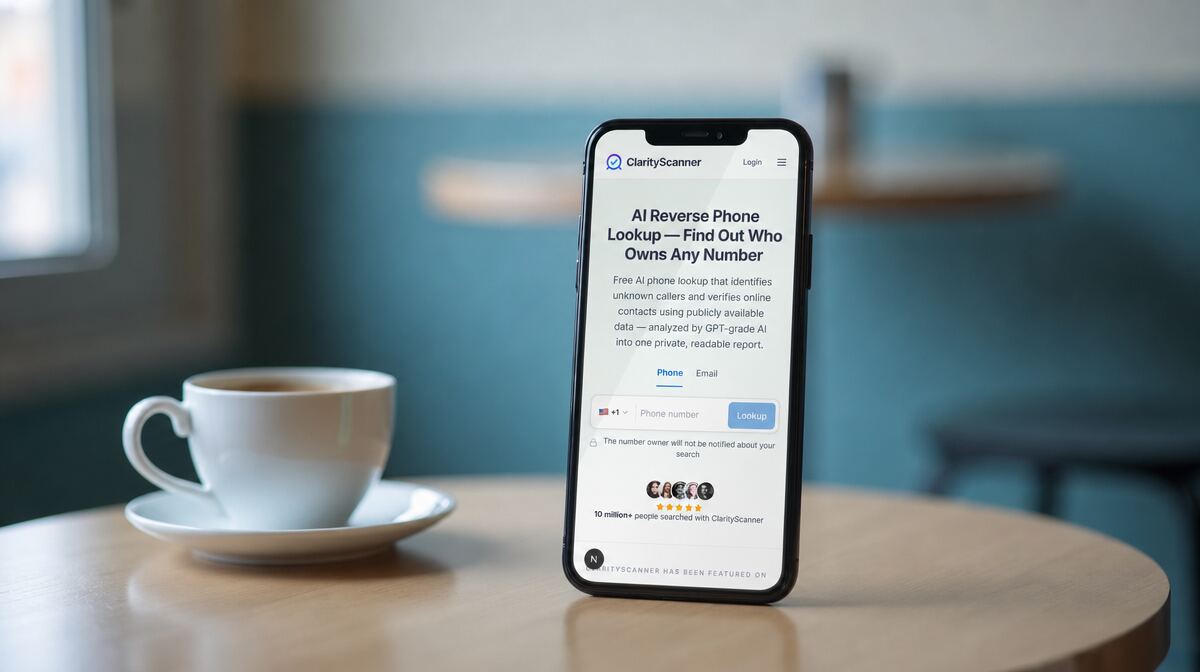
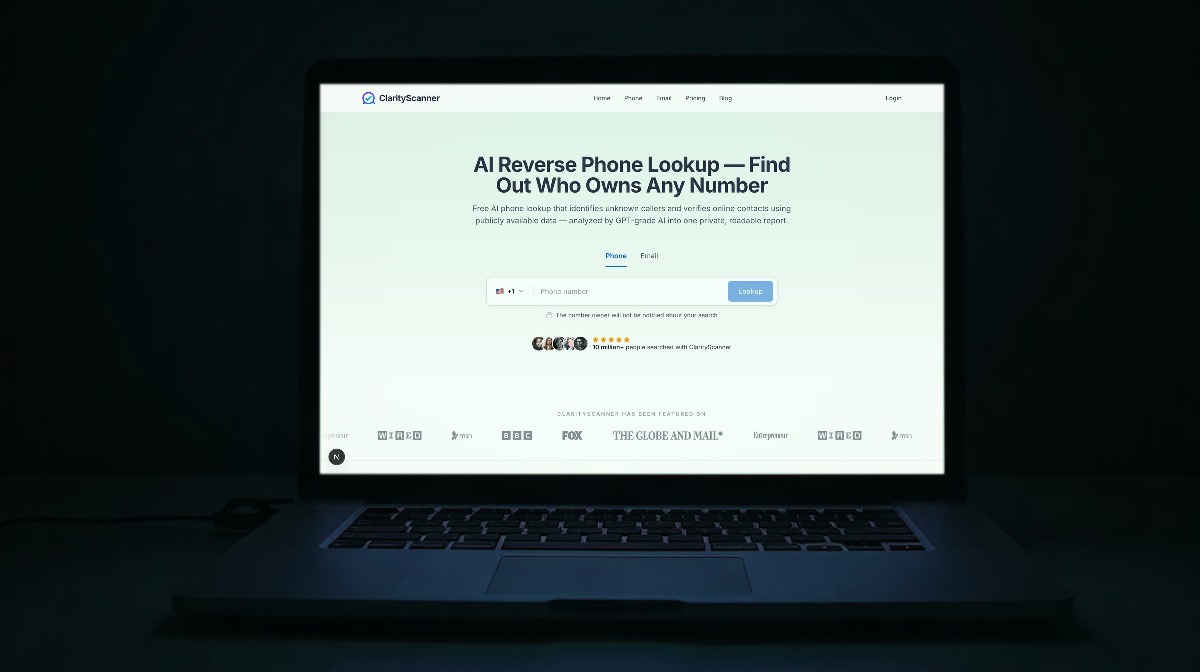
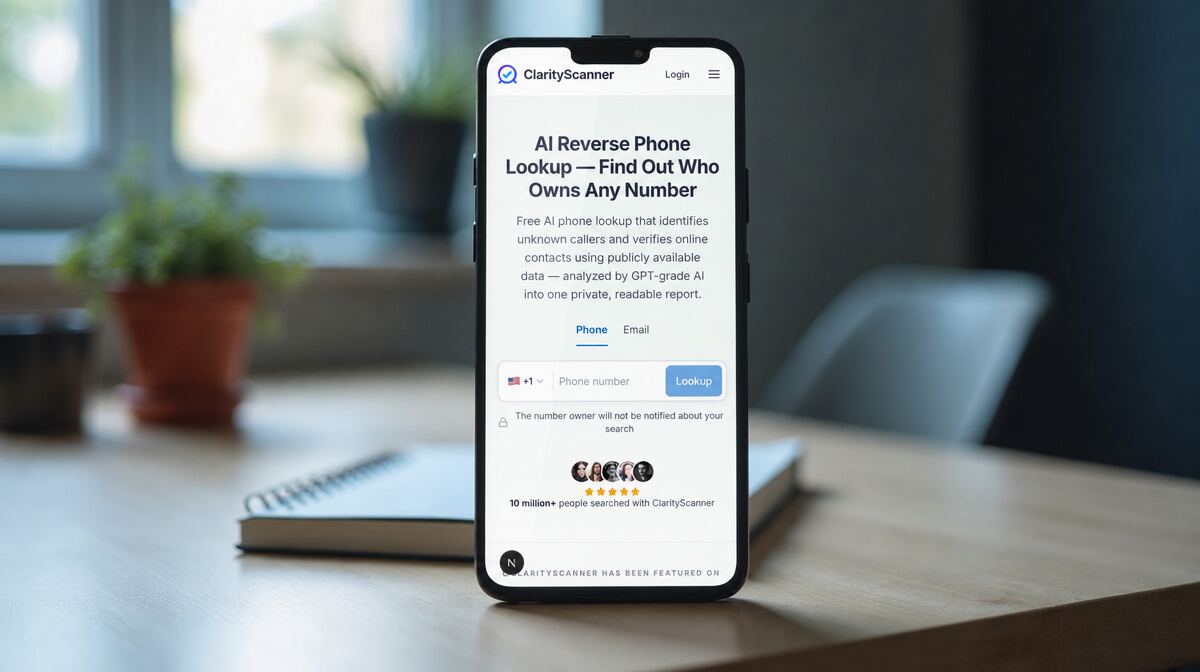
Most services in this category return a record dump. ClarityScanner runs the same class of public and licensed data through an analysis pass first: it reconciles the sources against each other, flags where they disagree, states how confident the identification is, and says plainly when the answer is "not enough evidence."
That last part is the difference that matters. A tool that never says "I don't know" is not more capable — it is just less honest about its weak matches.
If you are comparing options, our ClarityScanner vs ClarityCheck breakdown covers the feature and pricing differences directly.